

- Published on
Best Crypto Portfolio Trackers With AI Features: 2026 Guide
Listen to the full article:
- Authors

- Name
- Jagadish V Gaikwad
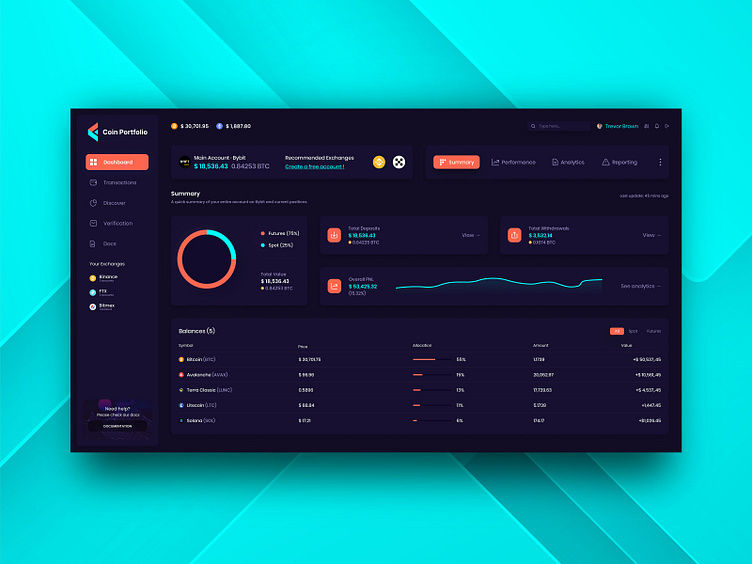
Stop guessing. Your crypto stack is already too messy.
Look, the average crypto portfolio is a disaster. Wallets are spread across chains, exchanges change balances every five minutes, and taxes show up like a jump scare. That’s exactly why the best crypto portfolio trackers with AI features matter now, not later.
The point isn’t just seeing your holdings. It’s getting smarter calls on risk, rebalancing, market moves, and tax pain before they wreck your week.
What these tools actually do
Here’s the thing: a decent crypto tracker used to mean “show me my coins.” That’s ancient history. The better tools now pull in wallets, exchange accounts, DeFi positions, and sometimes even NFTs, then layer AI on top for insights and alerts.
That AI layer is the real upgrade. According to the results, modern trackers can suggest rebalancing, flag volatility, and surface market trends or wallet risks through built-in AI assistants.
Why AI is the part you’ll care about
Real talk: most people don’t need another dashboard. They need fewer dumb surprises. AI features help by turning noisy portfolio data into something you can actually use, like predictive alerts, smarter allocation nudges, and faster research.
This matters because crypto doesn’t wait for your spreadsheet. If a tracker can spot weird drift, risky exposure, or a market move before you do, that’s not fluff. That’s money and stress saved.
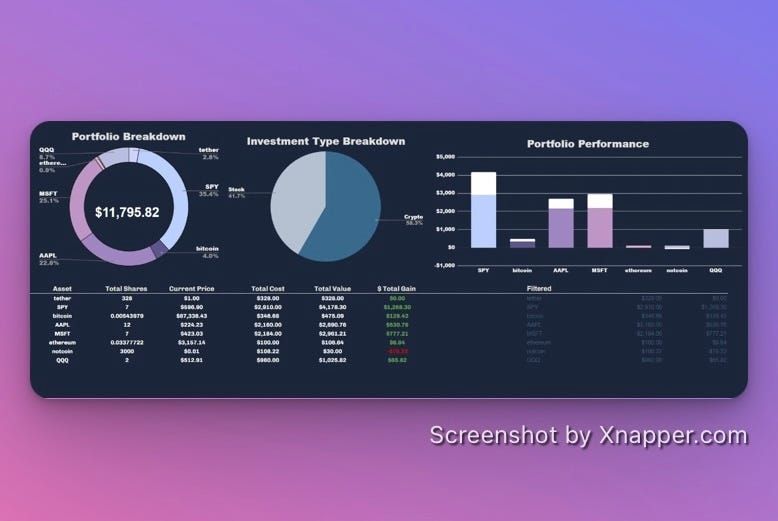
The best crypto portfolio trackers with AI features
Honestly? The market is crowded, but a few names keep showing up in the 2026 comparisons. BingX is repeatedly ranked as a top all-in-one option because it combines portfolio tracking, real-time market monitoring, BingX AI insights, and direct trading or copy-trading execution in one place.
CoinStats is another big one. It’s positioned as a broad all-around tracker with wallet and exchange coverage, security scanning, and an AI assistant in premium tiers for portfolio questions and market research.
Delta is the pick if you’re not only in crypto. It’s built for multi-asset tracking, so if you’re mixing crypto, stocks, and ETFs, it gives you one view instead of five half-broken apps.
Kubera takes a different angle. It’s more about total net worth tracking than raw crypto obsession, which is perfect if your money is split across bank accounts, investments, and wallets.
Zerion is the DeFi-native choice. If you live in wallets, protocols, and on-chain activity, it’s the cleaner fit because it’s built around that workflow instead of trying to be everything to everyone.
CoinTracker still matters, especially if taxes make you miserable. The search results highlight its strength in tax management and integration with reporting tools, which is exactly what a lot of investors want when April starts looking hostile.
Comparison table: which one fits your style?
| Tracker | Best for | AI angle | Real talk |
|---|---|---|---|
| BingX | Traders who want tracking and execution in one place | AI insights, market monitoring, execution-linked workflow | Best if you want speed and don’t want to bounce between apps |
| CoinStats | General users who want broad coverage | AI assistant for questions, risks, and trend research | Strong all-around pick, especially if you want simplicity |
| Delta | Mixed portfolios | Smarter portfolio visibility across assets | Better if crypto isn’t your only game |
| Kubera | Wealth tracking | Less about trading AI, more about clean net-worth visibility | Great if you’re tracking everything, not just tokens |
| Zerion | DeFi users | On-chain context and DeFi-focused analysis | Worth it if you actually use DeFi, not just talk about it |
| CoinTracker | Tax-focused investors | More about reporting intelligence than trading calls | The sane pick if taxes are your main headache |
What makes a tracker actually worth your time
The annoying part is that most tools look good in screenshots. Then you connect three wallets and realize the syncing is sloppy, the alerts are noisy, and the AI is basically a chat box with confidence issues. So you need to care about the stuff that doesn’t show up in a promo graphic.
Start with coverage. If it can’t track your exchanges, wallets, and DeFi positions cleanly, the rest is window dressing.
Then look at AI behavior. Good AI should help with rebalancing ideas, volatility warnings, and research shortcuts. Bad AI just repeats market headlines with better branding.
Finally, check whether it supports the way you actually work. If you trade often, BingX-style execution matters. If you’re mostly holding and filing taxes, CoinTracker and CoinStats make more sense.

Who should pick what
Here’s the thing: your “best” tracker depends on how messy your portfolio is. If you’re an active trader, you want speed, market context, and the ability to act without jumping through ten tabs.
If you’re a long-term investor, you want clean visibility and smart alerts. CoinStats and Delta fit that lane better because they help you keep an eye on the portfolio without turning your day into a trading terminal.
If DeFi is your whole personality, Zerion makes sense. If tax season ruins your mood every year, CoinTracker is the least painful path.
Don’t fall for the AI hype trap
Yeah, I know, everyone slaps “AI” on the box now. That doesn’t mean the product is smart. A lot of these tools are still just basic trackers with one chatbot feature hidden in the settings.
The real test is whether the AI changes your decision-making. Can it flag concentration risk, surface rebalancing ideas, or help you understand what changed in your holdings today? If not, it’s decoration.
That’s why the best crypto portfolio trackers with AI features are the ones that connect insight to action. BingX gets credit here because it ties monitoring to execution. CoinStats earns points because it mixes broad tracking with research-oriented AI. The others win when they stay focused on their lane.
What I’d actually tell a friend to choose
Look, if you want one answer, here it is. Pick BingX if you trade and want AI inside the same flow. Pick CoinStats if you want the cleanest all-around setup with broad coverage and a useful AI layer.
Pick Delta if your money is split across assets and you want one dashboard that doesn’t feel like a toy. Pick Zerion if you’re deep in DeFi and don’t want a generic tracker pretending it understands your life.
And if taxes are the only thing you care about, stop overcomplicating it. Use the tool that’s built to make reporting less ugly.
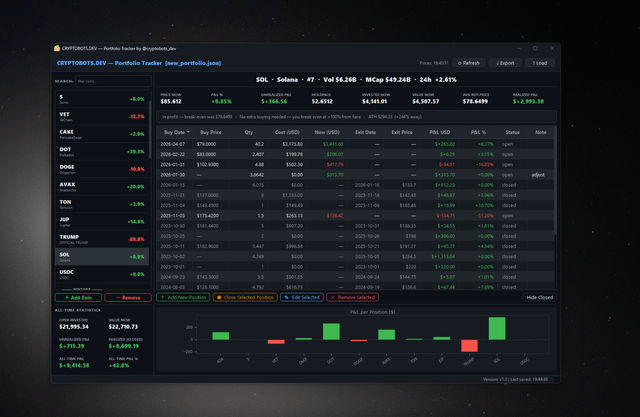
The catch nobody wants to admit
Most people don’t have a portfolio problem. They have a consistency problem. They open the app when the market is green, ignore it when it’s red, and then act surprised when they don’t know what they own.
A good tracker fixes part of that. A good AI tracker fixes a little more by showing you where the risk is before you panic-sell or overtrade. But it still won’t save you from sloppy habits.
So yes, the best crypto portfolio trackers with AI features are useful. They’re just not magic. They’re better than flying blind, which is a low bar, but in crypto that bar is somehow still way too high.
Real talk: if your portfolio is already spread across five wallets and three exchanges, you need a tracker yesterday. Which matters more to you right now: AI insights, tax reporting, or just finally seeing the whole mess in one place?
You may also like
- Advanced AI Chatbots for SaaS Onboarding: The Future of Customer Experience
- AI Tools That Save 20+ Hours Every Week: The Ultimate 2026 Guide
- AI-Driven Knowledge Bases for Tech Companies: Benefits, Use Cases & Top Tools
- The Future of One-Person Billion-Dollar AI Companies: Is Sam Altman’s 2028 Prediction Real?
- Top AI Integrations for eCommerce Platforms in 2025: Boost Sales, Personalization & Efficiency